
From Doubt to Trust | Australian Patient Undergoes Complex Fracture Surgery in Guangzhou
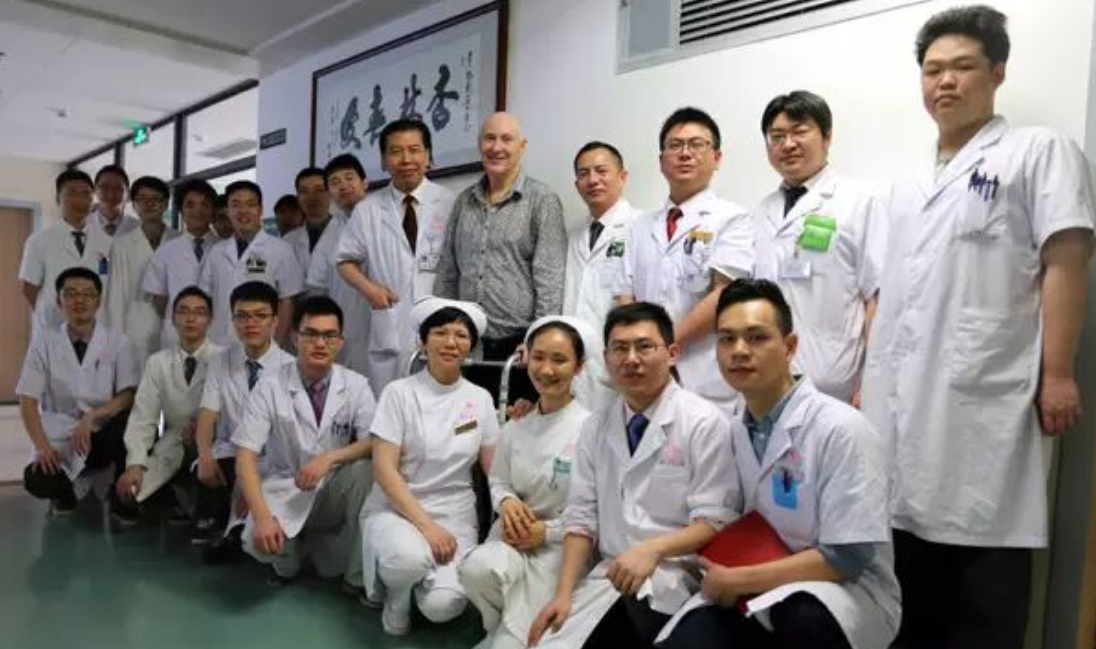
Mark, an executive at an Australian educational institution, shared these thoughts after receiving treatment at the First Affiliated Hospital of Jinan University. He had been admitted with fractures but was initially full of doubts about China's medical standards and doctor-patient relationships. After admission, the hospital used 3D printing to demonstrate the surgical plan, while the professionalism and responsible attitude of the doctors and nurses reassured him. After nearly five days, Mark was discharged in good condition.
Mark accidentally fell at his hotel and experienced severe pain in his left hip, making it impossible to walk without triggering intense pain. He decided to seek medical attention. However, he had heard that doctor-patient relationships in China were often “cold,” which made him afraid of being hospitalized. Relatives and friends in Australia also expressed concerns about the quality of medical services in Guangdong and suggested that he return to Australia for treatment. Despite his hesitation, the pain became unbearable, and he decided to try the First Affiliated Hospital of Jinan University.
That evening, Mark was taken to the emergency department of the First Affiliated Hospital of Jinan University and later transferred to the orthopedic and joint surgery department. The doctor on duty communicated with him in fluent, professional English, giving him a positive impression of the medical team.
The next day, with assistance from the medical staff, Mark underwent X-rays, CT, and other examinations. He was diagnosed with multiple fractures of the left superior pubic ramus, ischial ramus, ilium, and acetabular rim. Because of the unusual fracture locations, the surgery was complex and carried significant difficulty and risk. 3D printing was used to visualize the surgical process. After learning about the international patient's condition, Professor Zha Zhengang, Vice President of the hospital and Director of Orthopedics, examined Mark and discussed his condition with him just as he would with any new patient, easing his concerns.
After extensive analysis and discussion, Professor Zha Zhengang's team decided to provide personalized care and treatment. On the one hand, they focused on strengthening communication with Mark and providing attentive service. On the other, with Mark's consent, they used 3D printing to reproduce his injured pelvis at a 1:1 scale, showed the 3D-printed model to him, and explained the surgical design.
Still somewhat concerned, Mark and his wife consulted his brother, who worked in the Australian healthcare system, and other physician friends several times about the surgical plan. All of these medical professionals gave it their approval.
Mark finally put all his concerns aside and had his wife sign the surgical consent form. Before surgery, Professor Zha Zhengang's team made careful preparations, using the 3D model to adjust the angles, curvature, and depth of the fixation plates and screws to ensure precise execution. The surgery was highly successful, and Mark's mobility recovered smoothly under the attentive care of the medical staff.
During his nearly month-long hospital stay, Mark experienced the medical team's professional treatment and compassionate service firsthand. He repeatedly expressed his respect for the staff, saying, “The doctors in Guangdong are amazing!”
During this time, Professor Zha Zhengang developed a close friendship with Mark and his wife. “The doctor-patient relationship is actually simple. We must always keep patients at heart and emphasize communication with them. Only by earning their trust and understanding can we achieve positive interaction between doctors and patients.”
Mark also volunteered to give a presentation to the orthopedic medical staff about doctor-patient relationships, sharing his own experiences and feelings while using crutches. He also wrote a special thank-you letter.