
10 cm Fibroid Removed Minimally Invasively | Single-Port Laparoscopy Helps Canadian Overseas Chinese Patient Recover
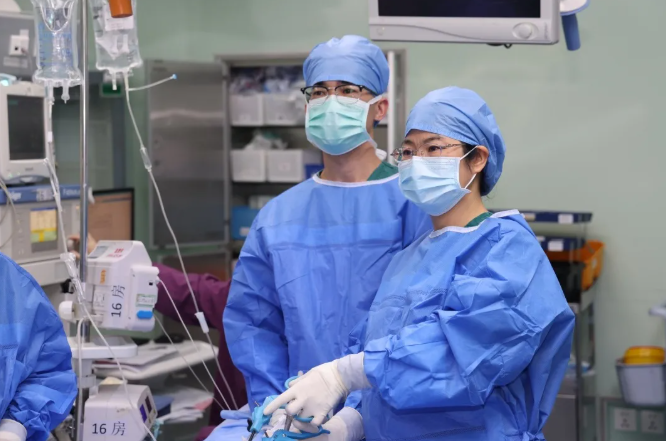
A giant 10 cm uterine fibroid was completely removed through a concealed incision of less than 3 cm at the navel. Gynecological specialists at the First Affiliated Hospital of Jinan University (Guangzhou Overseas Chinese Hospital) used single-port laparoscopic technology to provide a Canadian Chinese patient with truly scar-minimizing treatment. During a routine check-up while living in Thailand, 42-year-old Ms. Lin (pseudonym) was found to have a giant fibroid. The local hospital recommended four-port laparoscopy or open surgery, which she found daunting. She ultimately traveled to Guangzhou. At the First Affiliated Hospital of Jinan University, Professor Gao Lüfen's team removed the fibroid through a single umbilical incision in just over an hour, using an innovative “strip extraction” technique instead of a conventional morcellator to eliminate the risk of intraperitoneal tumor dissemination. She recovered quickly, was able to get out of bed the next day, and the navel incision blended into the natural folds with almost no visible scar.
Ms. Lin had been living in Thailand when a routine ultrasound revealed a giant 10 cm uterine fibroid accompanied by moderate anemia. Doctors told her that a fibroid of this size would require four-port laparoscopic or open surgery, potentially leaving visible scars and multiple wounds. As someone concerned about appearance and demanding high-quality medical care, she found this option difficult to accept. After researching online, she chose the team led by Professor Gao Lüfen, Director of Gynecology at the First Affiliated Hospital of Jinan University.
“When I saw ‘single-port’ and ‘scarless,’ I decided to fly back to Guangzhou for surgery.” Just a few days later, she arrived in Guangzhou and met Professor Gao Lüfen's team. “More and more patients like Ms. Lin are returning from overseas specifically for single-port laparoscopic surgery. Just last week, I performed two such procedures—one for a patient returning from Canada and one from the UK,” Gao said.
Given Ms. Lin's complex condition, Professor Gao Lüfen's team conducted a comprehensive assessment. The 10 cm fibroid was not only large but unusually soft and highly vascularized, with possible degeneration, increasing surgical complexity and risk. “She is still young; the larger the fibroid, the greater the bleeding and surgical risk,” Gao explained. “We needed to remove it completely while minimizing trauma as much as possible.”
Traditional laparoscopic surgery usually requires 3–4 small abdominal incisions, with one enlarged to 2–3 cm to allow a powered morcellator to fragment and remove the fibroid. This approach carries a potential risk of spreading tumor cells within the abdominal cavity.
Professor Gao Lüfen's team decided to perform a “single-port laparoscopic myomectomy,” completing the entire procedure through an approximately 3 cm incision hidden within the navel. “Because the umbilical opening is relatively large, there is no need to fragment the fibroid. I can cut it into a strip and remove it directly,” Gao explained. “This avoids tumor dissemination while remaining minimally invasive and safe.”
On the day of surgery, Professor Gao Lüfen was the lead surgeon, assisted by attending physician Zheng Shaolie. The team inserted the laparoscope and specialized instruments through a single umbilical incision, clearly visualizing the giant fibroid on the screen. Zheng described the key step: “We first place a bag around the fibroid, then cut it into strips and remove it.”
This “transumbilical strip extraction” technique is the key innovation of the procedure. The doctors cut the 10 cm fibroid into strips inside a protective bag and removed them completely through the umbilical incision, ensuring “zero residual tissue” in the abdominal cavity. “Conventional laparoscopy requires four ports, and it also requires a morcellator to fragment the fibroid,” Gao noted. “Single-port technology completely avoids this risk.”
During surgery, the team found that, as anticipated, the fibroid was unusually soft and richly vascularized, confirming a tendency toward degeneration. The protective extraction strategy completely prevented any potential dissemination of tumor cells.
The next day, Ms. Lin was able to get out of bed and resume a normal diet. What surprised her most was how the navel incision blended seamlessly with the natural folds, leaving almost no visible surgical mark. “My navel looks just like it did before; I can't find the incision. My anemia has also been corrected. It feels like a new beginning,” she said excitedly. Gao explained the unique advantage of single-port surgery: “Single-port means the incision is hidden in the navel, where it is difficult to see because the navel is naturally scar-like.” Beyond cosmetic benefits, the technique also offers clinical advantages, including less postoperative pain and faster recovery, meeting the scar-minimizing needs of patients with high aesthetic expectations.